Before the era of laboratory-formulated intimate washes and specialized pharmacy products, women cared for their intimate health with natural remedies passed down through generations. These grandmother's tips for feminine intimate hygiene are not just popular beliefs. Many of them are based on real natural properties, now confirmed by modern scientific research.
Apple cider vinegar, baking soda, aloe vera, vegetable oils, and probiotic yogurts are all everyday ingredients that our grandmothers used to care for their intimate areas long before the cosmetic industry offered sophisticated formulations. These natural remedies have the advantage of being simple, accessible, and generally well-tolerated by sensitive skin.
However, not all grandmother's tips are equal, and some practices passed down through generations can actually disrupt the balance of the vaginal flora rather than preserve it. Distinguishing truly beneficial natural remedies from those to avoid is essential to caring for one's intimate health with the right tools.
In this article, we present the 5 best grandmother's tips for feminine intimate hygiene, with a scientific explanation of their effectiveness and precautions for proper use for each.
1. Apple cider vinegar to balance intimate pH
Apple cider vinegar is undoubtedly the most popular grandmother's tip for feminine intimate hygiene, and it is also one of the best scientifically documented. Its naturally acidic pH, between 3 and 4, makes it a potential ally for maintaining protective vaginal acidity, the normal range of which is between 3.8 and 4.5.
The idea behind this tip is simple. By adding a few tablespoons of unfiltered apple cider vinegar to the rinse water for the external vulvar area, one creates a slightly acidifying solution that can help temporarily restore natural acidity disrupted by external factors such as unsuitable hygiene products or sexual intercourse.
The natural antibacterial and antifungal properties of apple cider vinegar have been documented in several scientific studies. The acetic acid it contains has an inhibitory effect on certain pathogenic bacteria and on Candida albicans, which causes vaginal yeast infections. These natural properties explain why this tip has been passed down through generations as a first-line remedy for mild intimate discomfort.
The correct way to use this tip is to dilute one tablespoon of organic, unpasteurized apple cider vinegar in one liter of lukewarm water and use this solution to gently rinse only the external vulvar area. It is essential never to use this solution inside the vagina, as too high a concentration of acetic acid can severely irritate the fragile vaginal mucous membrane and worsen existing imbalances.
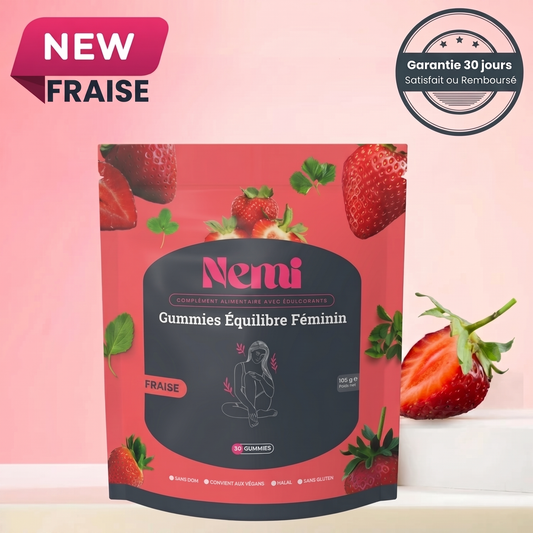
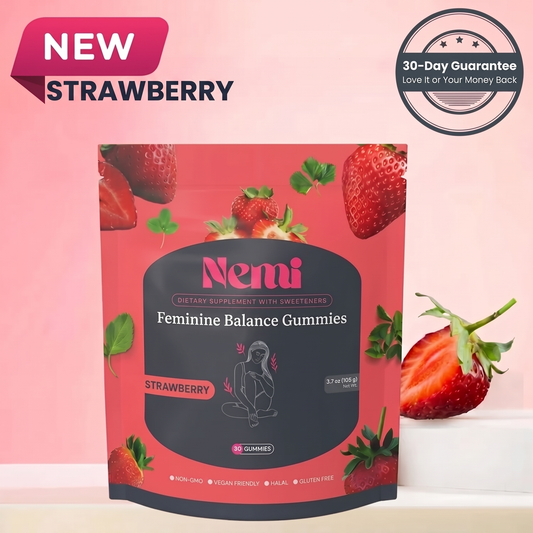
The main precaution is to always dilute apple cider vinegar sufficiently before any use on the intimate area. Pure or overly concentrated apple cider vinegar is aggressive for the vulvar mucous membrane and can cause burning and irritation. This tip is a temporary natural complement and not a substitute for internal probiotic care such as Nemi feminine balance gummies available on mynemi.com, which act directly on the vitality of the protective vaginal flora.
2. Aloe vera to soothe intimate irritations
Aloe vera is one of the oldest and most widely used medicinal plants in grandmother's remedies for feminine health. Its soothing, moisturizing, and natural anti-inflammatory properties make it a particularly valuable ally for relieving vulvar area irritations and maintaining the natural hydration of the intimate mucous membrane.
Pure aloe vera gel, extracted directly from the plant's leaf, is naturally slightly acidic with a pH between 4.5 and 5.5, which respects the natural acidity of the vulvar area without disturbing it. This pH compatibility is one reason for aloe vera's good tolerance on the intimate mucous membrane, unlike many other natural remedies whose unsuitable pH can worsen existing imbalances.
The soothing properties of aloe vera are based on its richness in mucopolysaccharides and acemannan, active compounds that create a protective, moisturizing film on the surface of the vulvar mucous membrane and reduce sensations of burning, dryness, and irritation. These compounds also have documented anti-inflammatory properties that calm local inflammatory reactions responsible for itching and redness.
For women suffering from vulvar dryness related to menopause, hormonal contraception, or breastfeeding, aloe vera is a particularly well-tolerated natural moisturizing treatment. A delicate external application of pure gel to the vulvar area after washing provides rapid and lasting relief from discomfort related to mucous membrane dryness.
The correct way to use aloe vera for the intimate area is to use only 99% or 100% pure gel without added dyes, alcohol, or preservatives. Gel extracted directly from a fresh plant leaf is ideally the purest available. Commercial gels should be carefully checked for their composition before use, as some products marketed as aloe vera gel contain additives incompatible with the sensitivity of the intimate mucous membrane.
Aloe vera is to be used only for external application on the vulvar area, never to be introduced inside the vagina. For internal support of the vaginal flora, Nemi gummies available on mynemi.com remain the most effective probiotic solution for deep action on microbial balance.
3. Baking soda for intimate itching
Baking soda is one of the most commonly used grandmother's remedies for intimate itching and discomfort. Its transgenerational popularity is based on its natural alkalizing and antifungal properties, which can provide temporary relief from certain intimate symptoms under precise and strictly controlled usage conditions.
The mechanism of action of baking soda on intimate itching is based on its ability to temporarily neutralize the acidity of the vulvar area. When intense itching is caused by contact irritation related to unsuitable hygiene products or synthetic clothing, a slightly alkaline baking soda solution can temporarily soothe the burning sensation by neutralizing the irritating agent present on the vulvar mucous membrane.
Its mild antifungal properties have also been documented against Candida albicans, which causes vaginal yeast infections. The slightly alkaline environment created by baking soda is less favorable for the proliferation of this opportunistic yeast, which explains why this tip is traditionally used as temporary relief for itchy yeast infections.
The correct way to use this tip is to dissolve one teaspoon of baking soda in one liter of lukewarm water and use this solution to gently rinse the external vulvar area. This use must be strictly occasional and never exceed two to three applications per week, as regular use of baking soda on the intimate area can worsen the imbalance of the vaginal flora by raising the pH too much and paradoxically creating conditions favorable to bacterial vaginosis.
The main limitation of this tip is that it treats the symptoms without addressing the root cause of the imbalance. Recurrent intimate itching is a sign of an imbalance in the vaginal flora that requires internal management with specific probiotics such as Nemi gummies available on mynemi.com, whose action on the protective flora is much more effective and lasting than occasional topical remedies.
4. Coconut oil to moisturize the intimate area
Coconut oil is one of the most popular grandmother's tips for feminine intimate care, and its reputation is well-deserved. Its moisturizing, antifungal, and natural antibacterial properties make it a particularly interesting external treatment for women suffering from vulvar dryness or mild irritations of the intimate area.
The richness of coconut oil in lauric acid is the source of its most documented antifungal properties. Lauric acid accounts for about 50% of the composition of virgin coconut oil and has a demonstrated inhibitory effect on Candida albicans, which causes vaginal yeast infections. This natural property explains why coconut oil is traditionally used as a first-line treatment for mild yeast discomfort.
Its emollient and moisturizing properties are also exceptional. Coconut oil forms a protective lipid film on the surface of the vulvar mucous membrane that retains natural hydration and protects the skin against external aggressions. For women suffering from vulvar dryness related to menopause, breastfeeding, or hormonal contraception, a light external application of virgin coconut oil after washing provides rapid and lasting relief from discomfort without the chemical agents present in many conventional moisturizers.
The correct way to use coconut oil for the intimate area is to apply a small amount of cold-pressed virgin coconut oil to the external vulvar area only after daily washing. It is imperative to choose organic, unrefined virgin coconut oil whose active properties are preserved by the cold extraction process. Refined or deodorized coconut oils have an impoverished composition that significantly reduces their therapeutic properties.
The main precaution regarding coconut oil is its incompatibility with latex condoms, whose resistance it alters, increasing the risk of breakage. This precaution is essential knowledge for women who use this method of contraception. Coconut oil should also never be used inside the vagina, as it can disturb the balance of the vaginal flora by creating an environment that favors the proliferation of certain pathogens.
5. Plain yogurt to rebalance vaginal flora
Plain yogurt is probably the best-known grandmother's tip for taking care of vaginal flora, and its reputation is based on a real scientific basis. Whole milk yogurts with active ferments contain live lactic acid bacteria, some strains of which are similar to the Lactobacillus naturally present in the protective vaginal flora.
The idea behind this tip is that regular consumption of plain yogurts rich in active ferments helps to enrich the intestinal microbiome with beneficial lactic acid bacteria, whose balance is directly connected to that of the vaginal flora via the gut-vagina connection documented by recent scientific research. A rich and diversified intestinal microbiome indirectly supports the dominance of Lactobacillus in the vaginal flora and contributes to maintaining the protective acidic pH.
The correct way to use this tip is to consume daily one to two whole milk yogurts with live active ferments, unpasteurized after production. Choose yogurts whose label explicitly mentions the presence of live ferments such as Lactobacillus bulgaricus and Streptococcus thermophilus, as industrial yogurts pasteurized after fermentation have lost much of their active bacterial load.
The main limitation of this tip is that the Lactobacillus strains present in yogurts are not the same as those that specifically colonize the vaginal mucous membrane. Lactobacillus bulgaricus and Streptococcus thermophilus are dairy strains that pass through the intestine without permanently colonizing the vaginal mucous membrane. For a direct and documented effect on the vaginal flora, probiotic supplements specifically formulated with Lactobacillus rhamnosus and Lactobacillus reuteri strains are much more effective than the sole consumption of yogurt.
Nemi gummies available on mynemi.com precisely combine these specific vaginal probiotic strains with synergistic active ingredients to act directly on the balance of the vaginal flora in a much more targeted and documented way than plain yogurt alone. This internal supplementation constitutes the fifth and most effective of the grandmother's tips modernized by contemporary probiotic science.