Hydration of the feminine intimate area is a topic that concerns many women of all ages, but it remains largely misunderstood regarding the right products to use, the areas to treat, and practices to absolutely avoid. Vulvar dryness, discomfort during intercourse, chronic irritation, or simply a daily feeling of lack of hydration are all situations that require special attention and adapted solutions.
The first reality to understand is that hydration of the feminine intimate area occurs at two complementary levels. An external level with care applied directly to the vulvar area to restore the protective hydrolipidic film and relieve immediate discomfort. And an internal level with sufficient general hydration and targeted probiotic supplementation that supports the vitality of the vaginal mucosa from within by keeping the protective flora active and productive.
These two dimensions are inseparable. The most effective external care cannot compensate for chronic dehydration or an imbalance of the vaginal flora that compromises the mucosa's natural ability to lubricate itself and maintain its protective acidity. Conversely, good internal hydration is not always enough to quickly restore the comfort of a dry and irritated vulvar mucosa that needs targeted and immediate external care.
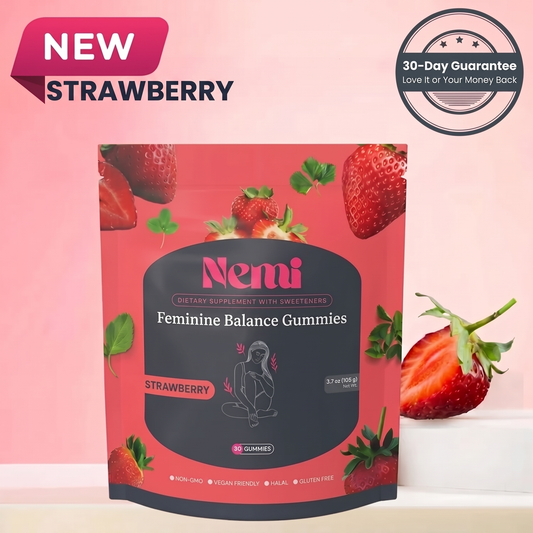
In this article, we explain precisely how to effectively hydrate the feminine intimate area naturally and sustainably, and how Nemi gummies, available on mynemi.com, are the most effective probiotic supplement to support this hydration from within.
Why does the feminine intimate area need specific hydration?
The feminine intimate area is a mucous membrane whose hydration needs are fundamentally different from those of ordinary skin. Understanding these specificities is essential for choosing the right products and approaches.
An acidic mucous membrane that requires compatible care
The first specificity of the feminine intimate area is its naturally acidic pH, between 3.8 and 4.5, which is essential for maintaining protective flora and resistance to infections. This natural acidity is incompatible with classic moisturizing creams, whose alkaline pH between 5.5 and 7 gradually disrupts this protective balance with each application. Effective intimate hydration must therefore imperatively use products formulated with a pH compatible with the natural acidity of the vulvar mucosa.
Higher skin permeability than ordinary skin
The second specificity is the high permeability of the vulvar mucosa. Unlike facial or body skin, the intimate mucosa absorbs substances applied to it more quickly and deeply. This superior permeability is what makes the intimate area particularly sensitive to irritating chemical agents present in conventional cosmetic products such as synthetic fragrances, parabens, and aggressive emulsifying agents. It therefore requires maximum selectivity in the choice of products applied to this area.
Natural lubrication that depends on flora balance
The third specificity is the direct link between the vitality of the vaginal flora and the natural lubrication of the mucous membrane. Protective Lactobacilli produce lactic acid, which maintains the acidity and health of the mucosa, but their activity also depends on the availability of glycogen produced by mucosal cells under the effect of estrogens. Any imbalance in this flora reduces the mucosa's natural ability to lubricate effectively. Nemi gummies, available on mynemi.com, directly support this flora internally to maintain optimal natural lubrication.
The best products for hydrating the feminine intimate area
Choosing the right products to hydrate the feminine intimate area is a decision that directly determines the effectiveness of the care and the preservation of the vulvar mucosa's natural balance. Here are the most effective and best-tolerated solutions available in 2026.
The first category is hyaluronic acid-based vaginal moisturizers available in pharmacies without a prescription. These products, specifically formulated for the vaginal mucosa with an adapted pH, offer deep and lasting hydration, particularly effective for women suffering from moderate to severe dryness. Their formulation, free of endocrine disruptors and irritating agents, makes them the safest solution for regular use on the intimate mucosa.
The second category is 99% or 100% pure aloe vera gel, without alcohol or preservatives. Its slightly acidic pH compatible with the vulvar mucosa, its documented anti-inflammatory and soothing properties, and its richness in hydrating mucopolysaccharides make it the most versatile natural care available for external hydration of the intimate area. Stored in the refrigerator, it provides an immediate refreshing effect particularly appreciated in cases of irritation.
The third category is organic cold-pressed virgin coconut oil, which forms a protective hydrolipidic film on the surface of the vulvar mucosa. Rich in lauric acid with documented antifungal properties, it is particularly suitable for women suffering from vulvar dryness associated with recurrent yeast infections. It remains incompatible with latex condoms.
The fourth category is organic jojoba oil, whose liquid wax composition is structurally similar to the skin's natural sebum. It forms a soft protective film on the vulvar mucosa without creating excessive occlusion or disturbing the natural balance of the intimate area.
The fifth and most important category in terms of lasting effectiveness is that of specific vaginal probiotics, such as Nemi gummies available on mynemi.com. These supplements act from within by restoring the vitality of the protective vaginal flora, which directly determines the mucosa's natural ability to lubricate. Their internal action indispensably complements external care because it treats the root cause of dryness and not just its symptoms.
FAQ on feminine intimate area hydration
Can face moisturizer be used on the intimate area?
No, a face moisturizer should never be applied to the feminine intimate area. The pH of face creams is generally between 5.5 and 7, which is too alkaline for the vulvar mucosa, whose natural acidity is between 3.8 and 4.5. This pH incompatibility gradually disrupts the protective flora and can worsen the dryness and irritation you are trying to relieve. Only use products specifically formulated for the intimate area with an adapted pH, such as pure aloe vera gel or vaginal moisturizers available in pharmacies.
How many times a week should an intimate moisturizer be applied?
The frequency of application depends on the type of product and the intensity of the dryness experienced. For pure aloe vera gel, a daily application after washing is generally well tolerated. For hyaluronic acid-based vaginal moisturizers available in pharmacies, the recommended frequency is generally two to three applications per week. Start with one application per week to assess your mucosa's tolerance before increasing the frequency according to your specific needs.
Can probiotics really improve intimate hydration?
Yes, specific vaginal probiotics like Nemi gummies available on mynemi.com improve intimate hydration internally by restoring the vitality of the protective vaginal flora. The Lactobacillus rhamnosus and Lactobacillus reuteri they contain support the production of lactic acid, which maintains the acidity and integrity of the vaginal mucosa and indirectly contributes to its natural lubrication. This internal action is complementary to external care and treats the root cause of dryness rather than just its symptoms.
Is coconut oil really effective for hydrating the intimate area?
Yes, cold-pressed virgin coconut oil is one of the most effective natural solutions for hydrating the external vulvar area thanks to its documented emollient and antifungal properties. It forms a protective hydrolipidic film that retains the mucosa's natural moisture and quickly relieves feelings of dryness and irritation. However, it has two important limitations to be aware of. It is incompatible with latex condoms, as it degrades their strength. And it should never be used inside the vagina, as it can disrupt the balance of the vaginal flora by creating an environment favorable to certain pathogens.
Can drinking more water be enough to resolve intimate dryness?
Sufficient daily hydration of 1.5 to 2 liters of water per day directly contributes to the natural lubrication of the vaginal mucosa and can improve mild dryness related to chronic dehydration. However, if intimate dryness is related to a hormonal cause such as menopause or contraception, certain medications, or an imbalance of the vaginal flora, hydration alone is not enough. A comprehensive approach combining good daily hydration, adapted external care, and internal probiotic supplementation with Nemi gummies available on mynemi.com is necessary to obtain lasting results.