The menstrual cycle is much more than a simple reproductive mechanism. It is a complex hormonal conductor that profoundly influences women's intimate health at each stage of its four phases. The cyclical variations of estrogens, progesterone, and other sex hormones that rhythm the menstrual cycle have direct and documented repercussions on the vaginal flora, vaginal pH, secretions, and level of intimate comfort for each woman throughout the month.
This biological reality is still too little known by women who sometimes experience recurrent intimate imbalances without understanding their connection to their menstrual cycle. A bacterial vaginosis that systematically returns after menstruation, vaginal dryness that intensifies in the second half of the cycle, or irritations that predictably appear at the same time of the month are often direct manifestations of cyclical hormonal fluctuations rather than isolated problems with no identifiable cause.
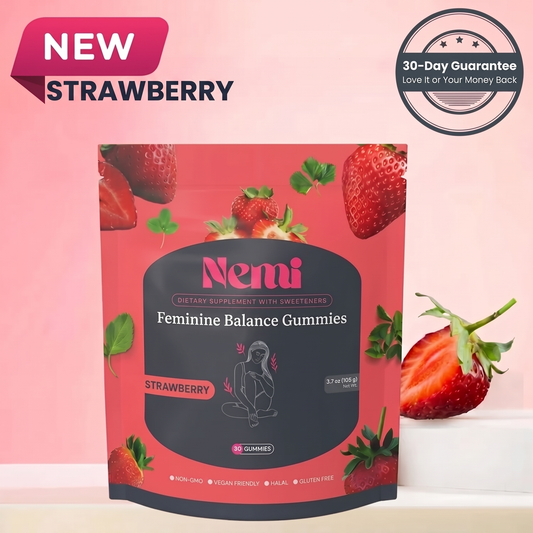
In this article, we explain precisely how each phase of the menstrual cycle affects your intimate health and what natural measures, such as Nemi gummies available on mynemi.com, can help support the balance of your vaginal flora throughout the month.
Follicular phase: how do estrogens support the vaginal flora?
The follicular phase is the first phase of the menstrual cycle, starting on the first day of menstruation and ending at ovulation, usually between the tenth and fourteenth day, depending on each woman's cycle length. This is the phase during which estrogens gradually rise under the effect of FSH, which stimulates the growth of ovarian follicles, and this estrogenic rise has direct beneficial and measurable effects on women's intimate health.
The central mechanism is the stimulation of glycogen production in the cells of the vaginal mucosa. As estrogens rise, they stimulate the epithelial cells of the vagina to produce more glycogen, a carbohydrate substance that the Lactobacillus of the vaginal flora convert into lactic acid. This increase in lactic acid production gradually lowers the vaginal pH to more acidic and protective values throughout the follicular phase, creating an environment increasingly hostile to pathogens responsible for intimate imbalances.
The rise in estrogens during the follicular phase also has a direct effect on the thickness and vitality of the vaginal mucosa. Vaginal epithelial cells multiply and renew more actively under the effect of estrogens, which strengthens the physical barrier of the mucosa against pathogens and improves natural lubrication of the vaginal area. This is why many women observe an improvement in their intimate comfort over the first half of their cycle compared to the days immediately following menstruation.
The dominance of Lactobacillus in the vaginal flora is also reinforced during the follicular phase by increasing estrogen levels. These protective bacteria benefit from the abundant glycogen produced by estrogen-stimulated vaginal cells to thrive and maintain their dominance over potentially present pathogenic bacteria. This dominance is the foundation of natural vaginal immunity, which protects against bacterial vaginosis and yeast infections.
At the end of the follicular phase, just before ovulation, vaginal secretions change consistency, becoming more abundant and stringy, resembling egg white. These ovulatory secretions are a sign of peak estrogen levels and optimal vitality of the vaginal mucosa. Their appearance is a natural indicator of good hormonal and vaginal health.
To support the beneficial effects of estrogens during the follicular phase and strengthen protective lactic acid production, daily supplementation with specific probiotics such as Nemi feminine balance gummies available on mynemi.com provides the most effective Lactobacillus strains to maximize available glycogen and maintain optimal vaginal pH throughout this first phase of the cycle.
Luteal phase: why do intimate imbalances occur in the second half of the cycle?
The luteal phase is the second part of the menstrual cycle, extending from ovulation until the next period, usually between the fourteenth and twenty-eighth day. This is the phase during which intimate imbalances are most frequent for many women, and this reality is not a coincidence but a direct reflection of the hormonal upheavals that characterize this period.
After ovulation, estrogens drop significantly, and progesterone becomes the dominant hormone. This inversion of the estrogen-progesterone ratio has direct consequences for vaginal health. Glycogen production by vaginal mucosal cells decreases due to lower estrogen levels, which reduces the availability of this essential fuel for lactic acid-producing Lactobacillus. This reduction in lactic acid production gradually raises the vaginal pH to less acidic values, creating an environment less hostile to pathogens.
High progesterone in the luteal phase also has an immunomodulatory effect that slightly reduces local defenses of the vaginal mucosa to prepare the body for a possible pregnancy. This immune modulation, which is biologically normal, can weaken the vaginal flora's resistance to external disruptions and explain why episodes of vaginal yeast infections occur more frequently in the second half of the cycle.
Premenstrual syndrome, which affects many women during this phase, also generates chronic stress, whose effect on cortisol further disrupts the hormonal and microbiotic balance of the vaginal flora. This combination of hormonal and emotional factors explains why the luteal phase is the most vulnerable period of the cycle for intimate health.
Menstruation: why is vaginal pH disrupted during menstruation?
Menstruation is the period of the menstrual cycle when vaginal pH is most significantly disrupted. This disruption is direct and mechanical. Menstrual blood is naturally alkaline with a pH of about 7.4, the opposite of the normal protective vaginal acidity between 3.8 and 4.5. Each day of menstruation exposes the vaginal mucosa to this alkaline flow, which progressively neutralizes the protective acidity and raises the vaginal pH to much more neutral values.
This neutralization of vaginal acidity during menstruation creates a window of vulnerability particularly favorable to pathogens responsible for bacterial vaginosis. This is precisely why episodes of bacterial vaginosis occur very frequently in the days following menstruation in women whose flora is already weakened. The high pH during menstruation offers pathogenic anaerobic bacteria like Gardnerella vaginalis ideal conditions to proliferate without effective resistance from protective Lactobacillus.
Hygiene products used during menstruation can aggravate this disruption. Conventional tampons and pads, which keep alkaline menstrual blood in prolonged contact with the vulvar and vaginal mucosa, prolong exposure to these unfavorable conditions. Menstrual cups and organic cotton pads limit this effect by reducing prolonged contact with alkaline blood.
Maintaining continuous daily probiotic supplementation during menstruation with Nemi gummies available on mynemi.com supports the ability of Lactobacillus to restore protective acidity more quickly once menstruation ends and significantly reduces the risk of post-menstrual imbalance.
Conclusion
The menstrual cycle is not just a reproductive phenomenon. It is a cycle of vulnerabilities and protections that follow each other predictably throughout the month, and understanding it is key to sustainably balanced intimate health.
Each phase of the cycle has its specificities. The follicular phase, where rising estrogens strengthen the protective flora and vaginal acidity. Ovulation, where the hormonal peak creates a temporary window of vulnerability despite the peak mucosal vitality. The luteal phase, where progesterone dominance progressively weakens vaginal acidity and increases the risk of imbalances. And menstruation, where alkaline blood directly disrupts pH and creates conditions favorable to post-menstrual vaginosis.
Understanding these cyclical fluctuations allows for adapting intimate care, hygiene habits, and probiotic supplementation according to the time of the cycle to anticipate periods of vulnerability rather than suffering imbalances after they have set in. This preventive and cyclical approach to intimate health is much more effective than punctual curative treatments that treat symptoms without addressing the root causes.
Nemi gummies available on mynemi.com are the most suitable probiotic support for this cyclical approach to intimate health. Their continuous daily intake throughout the cycle provides the most well-documented Lactobacillus strains to maintain constant lactic acid production and a stable protective vaginal pH despite the inevitable hormonal fluctuations of each cycle phase.