Female intimate hygiene is not just about external cleaning products. It encompasses an equally important internal dimension that concerns the balance of the vaginal flora, the natural pH of the mucous membrane, and resistance to recurrent infections. And it is precisely in this internal dimension that natural supplements can play a significant role by supporting and strengthening the natural defense mechanisms of the female body.
The market for natural supplements for intimate hygiene has evolved considerably in recent years. The offer has been enriched and diversified with increasingly targeted formulas that combine specific probiotics for vaginal flora, plant extracts with documented anti-inflammatory and antibacterial properties, and essential vitamins for hormonal and immune balance. But this abundance of offerings also makes it more complex for women who are looking for the most effective and well-formulated products.
Because not all natural supplements are equal in terms of their effectiveness on female intimate health. The difference between a supplement that produces real results and one whose benefits remain purely marketing lies in specific criteria. The nature and specificity of the probiotic strains used, the relevance of the dosages, the quality of the selected plant actives, and the scientific coherence of the overall formulation. These criteria are not always easy to evaluate without in-depth knowledge of the subject.
In this article, we give you all the essential information to understand how natural supplements can support your intimate hygiene, which active ingredients are truly effective, and how to choose the formulas best suited to your specific needs.
Why natural supplements can support female intimate hygiene
The vaginal flora is a living and dynamic ecosystem whose balance depends on a multitude of simultaneous factors. Diet, stress, hormonal variations, antibiotic use, sexual intercourse, and hygiene practices all directly or indirectly influence the composition and vitality of the vaginal microbiome. In this complex and sensitive environment, natural supplements can play a valuable supportive role by strengthening the natural defense mechanisms of the female body when these disruptive factors accumulate.
The first reason why natural supplements are relevant for female intimate hygiene is the close link between the gut microbiome and the vaginal microbiome. These two bacterial ecosystems communicate constantly, and their balance is interdependent. An intestinal microbiome depleted or imbalanced by a diet insufficient in fiber, probiotics, and prebiotics gradually affects the diversity and vitality of the vaginal flora. Probiotic supplements containing Lactobacillus strains specifically documented for their affinity with the vaginal mucosa act on this connection by simultaneously enriching both microbiomes and creating a biological environment favorable to the dominance of protective bacteria.
The second reason is the difficulty in maintaining sufficient dietary intake of beneficial active ingredients for intimate flora through diet alone. The amounts of probiotics naturally present in fermented foods such as yogurt, kefir, or sauerkraut are much lower than the clinically effective doses demonstrated in studies on vaginal health. To reach documented efficacy thresholds, generally between one and ten billion CFUs per day of specific Lactobacillus strains, targeted supplementation via quality food supplements is often necessary in addition to a balanced diet.
The third reason is the impact of hormonal and environmental disruptors on the balance of female intimate flora. Chronic stress, hormonal contraceptives, antibiotic treatments, and exposure to endocrine disruptors present in food and the environment create recurrent imbalances in the vaginal microbiome that diet alone struggles to compensate for quickly enough. Natural supplements provide a concentrated dose of protective active ingredients at the precise moment the body needs them most to quickly restore the disturbed balance.
The fourth reason is the availability of certain plant active ingredients with documented anti-inflammatory and antimicrobial properties that are not easily accessible in therapeutic quantities through a regular diet. Extracts such as cranberry, whose proanthocyanidins inhibit the adherence of pathogenic bacteria to the walls of the urinary and vaginal mucosa, calendula with anti-inflammatory properties on mucous membranes, or grapefruit seed extract with natural antimicrobial properties are active ingredients that only targeted supplementation can provide in truly effective quantities.
Finally, the fifth reason is the preventive dimension that natural supplements allow to address continuously and proactively. Rather than waiting for an imbalance to appear to react with curative medical treatment, regular supplementation with well-formulated natural supplements creates a vaginal environment constantly unfavorable to the proliferation of pathogens. This preventive approach is particularly valuable for women who suffer from recurrent imbalances in their intimate flora and who seek to break free from the vicious cycle of medical treatment followed by recurrence, which considerably alters their quality of life.
The most effective natural active ingredients for female intimate hygiene
Not all natural active ingredients are equal in their action on female intimate health. Some have solid scientific documentation validating their effectiveness. Others are more a matter of popular tradition than clinical evidence. Here are the most well-documented active ingredients for their specific action on the balance of female intimate flora.
Lactobacillus rhamnosus and Lactobacillus reuteri strains
These two probiotic strains are the most scientifically documented active ingredients for their specific action on vaginal health. Numerous randomized clinical studies have demonstrated their ability to colonize the vaginal mucosa after oral administration, maintain a protective acidic vaginal pH, and significantly reduce the frequency of episodes of bacterial vaginosis and vaginal candidiasis in women who suffer from them recurrently. Lactobacillus rhamnosus GR-1 and Lactobacillus reuteri RC-14 are the strains with the most abundant and rigorous clinical documentation. Their presence in an intimate health supplement and their precise dosage of at least one billion CFUs per day are the first criteria to check when choosing a product.
Cranberry and its proanthocyanidins
Cranberry is the most widely used natural active ingredient for female urinary and intimate health. Its type A proanthocyanidins are polyphenolic compounds that inhibit the adherence of pathogenic bacteria such as Escherichia coli to the walls of the urinary and vaginal mucosa. By preventing this adherence, cranberry reduces the risk of urinary tract infection and helps maintain a mucosal environment less favorable to the proliferation of pathogens. To be effective, a cranberry extract must be standardized in proanthocyanidins at a minimum dose of 36 mg per day according to the recommendations of the European Medicines Agency.
Vitamin C
Vitamin C is a particularly valuable multifunctional active ingredient for female intimate health. It helps maintain the natural acidity of the vagina by participating in the production of ascorbic acid, which strengthens the protective acidic pH of the vaginal mucosa. Its antioxidant properties strengthen the local immune defenses of the mucosa against pathogens. And it supports the synthesis of collagen, which maintains the integrity and elasticity of the vaginal mucosa. Studies have shown that vaginal vitamin C tablets significantly reduce the recurrence of bacterial vaginosis, but oral intake of vitamin C also contributes to these protective effects through its systemic action on immunity and vaginal acidity.
Zinc
Zinc is an essential mineral for immune and mucosal health whose role in the balance of female intimate flora is often underestimated. It participates in regulating the local inflammatory response, supports the activity of immune cells in the vaginal mucosa, and contributes to maintaining the integrity of the epithelial barrier that protects the mucosa against pathogens. Insufficient zinc levels are associated with an increased susceptibility to recurrent vaginal infections and slower healing of mucosal micro-lesions. A daily intake of 10 to 15 mg of zinc through diet or supplementation is recommended to maintain protective levels.
Adaptogenic plant extracts
Certain adaptogenic plant extracts such as ashwagandha and maca indirectly contribute to the balance of female intimate flora by modulating the stress response and reducing chronic cortisol levels. As we discussed earlier, chronic stress disrupts hormonal balance and creates an environment favorable to imbalances in the vaginal flora. These adaptogenic plants, which normalize the body's stress response, indirectly create a hormonal environment more favorable to the vitality of the protective flora.
How to choose the right natural supplement for your intimate hygiene
The market for natural supplements for female intimate hygiene offers a plethora of options that can quickly become confusing for women seeking an effective and well-formulated solution. Dozens of products promise similar results with highly variable formulations and extremely uneven quality levels. Here are the most determining criteria for choosing the right natural supplement according to your specific needs.
The first criterion is the specificity and documentation of the probiotic strains. As we detailed in the previous chapter, not all probiotic strains are equivalent in their action on vaginal health. A supplement that contains generic probiotic strains without specific documentation on their affinity with the vaginal mucosa will produce significantly inferior results to a supplement that uses Lactobacillus rhamnosus GR-1 and Lactobacillus reuteri RC-14 strains, whose efficacy on vaginal balance is the best scientifically documented. Always check the precise names of the strains used and not just the generic mention "probiotics" before choosing your supplement.
The second criterion is the dosage of active ingredients. The presence of an active ingredient in a formula does not guarantee its effectiveness if its dose is insufficient to reach clinically relevant thresholds. A supplement that contains cranberry without specifying the concentration of proanthocyanidins or with a dose below the recommended 36 mg will not produce the expected protective effects on the urinary and vaginal mucosa. Similarly, a supplement that contains probiotics without specifying the number of CFUs per dose or with a dosage below one billion CFUs will not allow effective colonization of the intestinal and vaginal microbiome. Transparency regarding dosages is a reliable indicator of a manufacturer's seriousness.
The third criterion is the viability of probiotic strains until the time of consumption. Probiotic bacteria are living organisms sensitive to heat, humidity, and gastric acidity. A poorly formulated or packaged supplement may contain dead bacteria that have no beneficial effect on the flora despite the CFU numbers displayed on the packaging. Quality supplements use microencapsulation technologies that protect probiotic strains against gastric acidity and ensure their viability until their site of action in the intestine. Prioritize products whose stability at room temperature is documented and whose packaging protects the strains from humidity.
The fourth criterion is the coherence of the overall formulation. A good intimate hygiene supplement is not limited to a single active ingredient but combines ingredients whose effects are complementary and synergistic. Specific probiotics, vitamin C, zinc, and possibly selected plant extracts for their action on the vaginal mucosa. This combination of synergistic active ingredients produces broader and more complete effects on intimate balance than simple supplementation with a single isolated active ingredient. Check that each ingredient in the formula has a scientific reason for being present and that the active ingredients have been selected for their complementarity and not for marketing reasons.
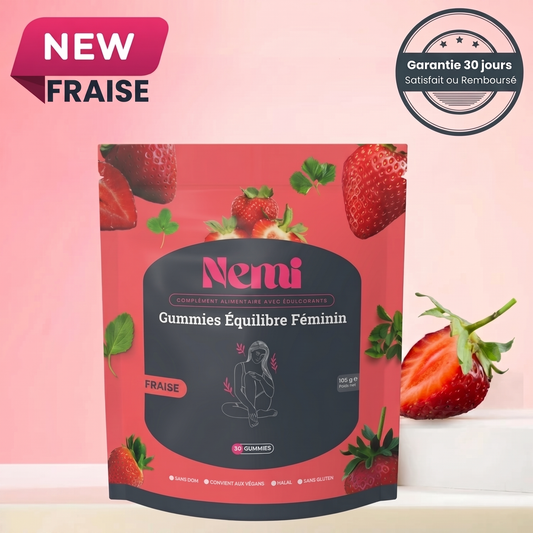
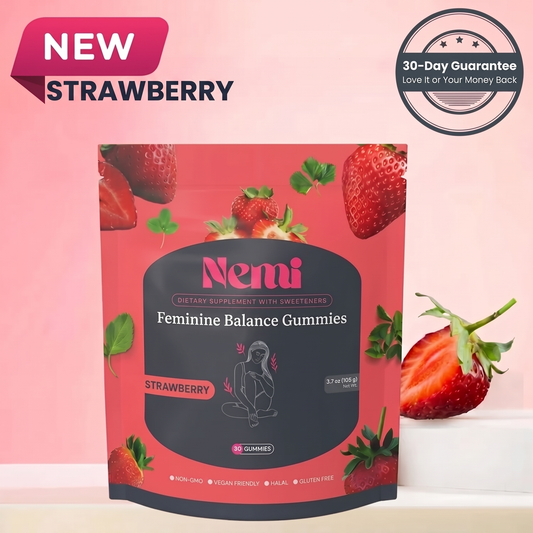
The fifth criterion is the absence of unnecessary or problematic ingredients. Artificial colorings, controversial preservatives, allergenic excipients, and excessive added sugars are components that the best formulas deliberately avoid. Brands like Nemi offer supplements for female intimate balance formulated with scientific rigor that is concretely reflected in the selection of active ingredients, the precision of dosages, and the absence of superfluous ingredients. Visit mynemi.com to discover their formulas specifically developed for female intimate balance.