Female intimate balance and love life are two dimensions of women's health and well-being that influence each other much more profoundly than many women realize. Yet, this connection is rarely openly addressed by health professionals during consultations, despite directly impacting the daily quality of life and self-confidence of a considerable number of women.
Because an imbalance in the intimate flora is not limited to physical symptoms such as recurrent vaginosis, yeast infections, or persistent discomfort. It also generates emotional and relational repercussions that can affect intimacy in the couple, self-confidence, and serenity in one's love life. A woman suffering from unusual odors, chronic irritation, or persistent discomfort often experiences a situation of embarrassment and anxiety that naturally impacts her relationship with her body and with others.
Conversely, emotional and relational factors in love life have a direct and documented influence on the balance of the female intimate flora. Relational stress, hormonal variations linked to desire cycles, and lifestyle changes associated with living as a couple are all factors that can gradually disrupt the balance of the vaginal microbiome and create a favorable ground for recurrent imbalances.
In this article, we specifically explore this bidirectional link between female balance and love life, and the natural solutions available to take care of one's intimate health in this specific context.
How does love life influence the female intimate flora?
Love life exerts a direct and multidimensional influence on the balance of the female intimate flora via several well-documented biological and hormonal mechanisms.
Sexual intercourse and vaginal pH
The first mechanism is the impact of sexual intercourse on vaginal pH. The naturally acidic pH of the vagina, between 3.8 and 4.5, can be temporarily altered during sexual intercourse. Semen is naturally alkaline with a pH between 7.2 and 8.0, which temporarily neutralizes the protective vaginal acidity. In most women with a robust and balanced flora, this temporary modification is quickly compensated by Lactobacillus, which restores the acidic pH within a few hours. However, in women whose flora is already weakened, this repeated pH disruption can create conditions favorable to recurrent imbalances, such as post-coital bacterial vaginosis.
Relational stress and its impact on the microbiome
The second mechanism is the influence of relational stress on the vaginal microbiome. Tensions in love life, periods of conflict or relational uncertainty generate an elevation of cortisol, whose impact on the intestinal and vaginal microbiome is documented. Chronically elevated cortisol disrupts the hormonal balance that supports the vitality of protective Lactobacillus and gradually creates a ground more favorable to imbalances. This connection between emotional stress and intimate health is often underestimated, but it explains why many women observe intimate imbalances during periods of relational tension.
New partners and microbiome diversification
The third mechanism is microbiome diversification during partner changes. Each individual has a unique microbiome, and sexual intercourse with a new partner involves microbiotic exchanges that can temporarily destabilize the vaginal flora. This disruption is generally transient in women with a strong flora but can trigger episodes of imbalance in women with a less robust protective flora. This biological reality explains why some women observe intimate imbalances during new relationships without this being linked to a sexually transmitted infection.
Hormonal variations linked to love life
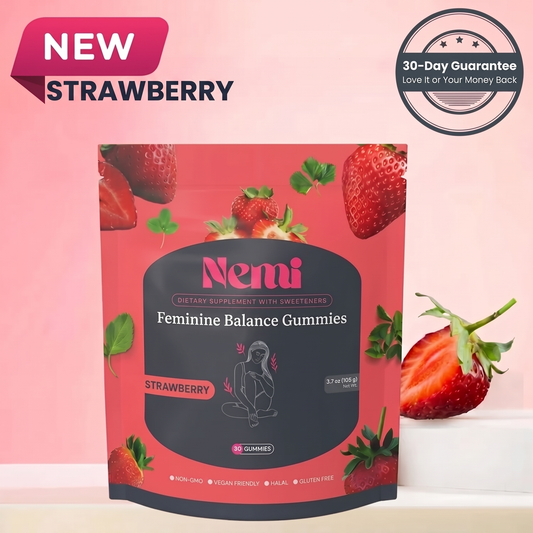
The fourth mechanism is the influence of hormonal variations associated with love life. Variations in estrogen and oxytocin linked to the cycles of attraction, desire, and attachment in love life indirectly influence the vitality of the vaginal flora, as protective Lactobacillus are particularly sensitive to estrogenic fluctuations. These hormonal variations are natural and beneficial overall, but they can contribute to creating periods of vulnerability in the intimate flora that specific probiotic supplements like Nemi gummies, available on mynemi.com, can help stabilize.
How can an intimate imbalance affect love life?
An imbalance in the intimate flora is never confined to its purely physical dimension. Its repercussions on love life and the relationship with others are real and often deeper than what women who suffer from it dare to express to their doctor or partner. These repercussions deserve to be openly addressed because silencing them contributes to maintaining a cycle of stress and anxiety that itself aggravates the imbalances.
The first repercussion is the embarrassment and anxiety linked to symptoms. A woman suffering from unusual odors, chronic irritation, or abnormal discharge often experiences intense psychological discomfort in her intimate life. This embarrassment can translate into emotional and physical distance in the couple, a reluctance to intimacy, and a feeling of shame or helplessness in the face of recurrent symptoms that seem difficult to control. This distance is not a reflection of a lack of desire or a relational problem, but the direct consequence of physical discomfort that the woman does not always know how to explain to her partner.
The second repercussion is the impact on self-confidence and body image. The relationship with one's body is deeply affected by recurrent intimate imbalances. A woman who goes through several episodes of vaginosis or yeast infection often develops a distrust of her own body, a feeling of intimate vulnerability, and difficulty feeling comfortable and serene in her love life. This alteration of self-confidence is one of the most lasting consequences of chronic intimate imbalances, as it often persists long after the resolution of physical symptoms.
The third repercussion is difficult communication with the partner. Intimate imbalances are taboo subjects in many couples, which generates unspoken words, misunderstandings, and sometimes unjustified relational tensions. A partner who does not understand the reasons for reluctance to intimacy may interpret this distance as a signal of disinterest when it is exclusively linked to physical discomfort. This lack of communication is often more damaging to the relationship than the imbalance itself.
The most effective solution to break this cycle is twofold. On the one hand, active management of intimate balance with probiotic supplements like Nemi gummies, available on mynemi.com, which restore the protective flora and reduce the frequency of imbalances. On the other hand, open and benevolent communication with one's partner about these normal and common biological realities allows for de-dramatizing the situation and maintaining a solid emotional intimacy during periods of physical imbalance.
How to take care of your intimate balance in the context of your love life?
Taking care of your intimate balance in the context of your love life requires adopting simple and consistent habits that protect the vaginal flora while preserving the quality and spontaneity of intimate life. Here are the most effective actions to integrate into your daily life.
The most important habits to preserve your intimate balance in the context of your love life are:
- Urinate after each sexual intercourse to eliminate bacteria that could travel up to the urinary tract and reduce the risk of post-coital urinary tract infections.
- Clean the vulvar area with a pH-balanced product between 4 and 5 after each intercourse to restore the natural acidity of the mucous membrane without harming the protective flora.
- Take intimate probiotics daily, such as Nemi gummies available on mynemi.com, to maintain a robust vaginal flora resistant to regular disruptions related to intimate life.
- Avoid glycerin-based lubricating products that promote Candida albicans proliferation and opt for water- or aloe vera-based lubricants compatible with the vaginal flora.
- Communicate openly with your partner about periods of intimate imbalance to de-dramatize the situation and maintain solid emotional intimacy during periods of treatment or recovery.
- Maintain a flora-friendly diet by reducing refined sugars and increasing intake of fermented foods, vitamin C-rich fruits, and green vegetables.
- Actively manage relational stress through relaxation practices, as chronic cortisol is one of the most destabilizing factors for the vaginal flora.
- Consult your gynecologist regularly for preventive monitoring of your intimate health and do not wait for symptoms to appear to take care of your balance.