Herbal teas are playing an increasing role in women's wellness routines. Raspberry leaf, yarrow, chasteberry, and nettle are regularly presented as natural allies for hormonal balance, menstrual comfort, and intimate health. But beyond traditional uses passed down from generation to generation, what is the scientific reality of their effectiveness on women's balance?
The answer is nuanced. Some medicinal plants have a documented effect on specific feminine symptoms such as menstrual pain, premenstrual syndrome, or hot flashes related to menopause. Others have a reputation that far exceeds what available studies actually confirm. And all have limitations and contraindications that women who consume them regularly should be aware of.
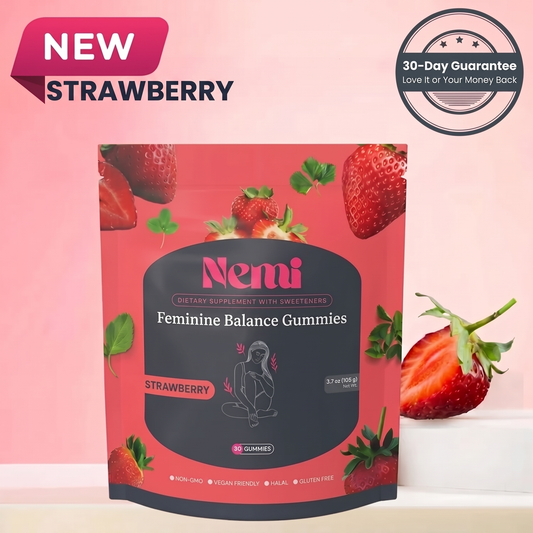
What is certain is that herbal teas alone do not constitute a complete solution for women's intimate balance. They can be a valuable natural complement to a healthy lifestyle, a balanced diet, and targeted probiotic supplementation such as Nemi gummies available on mynemi.com, which directly support the vitality of the protective vaginal flora.
In this article, we explain precisely which herbal teas are genuinely recommended for women's balance and how to effectively integrate them into your wellness routine.
Which herbal teas are beneficial for women's hormonal balance?
Some medicinal plants have a documented effect on women's hormonal balance and can be a valuable natural complement to a suitable lifestyle. Here are the most well-documented and widely used herbal teas to support women's hormonal balance.
- Chasteberry: the most well-documented plant for regulating premenstrual syndrome and supporting progesterone production in the second half of the cycle. Its action on the pituitary axis makes it the reference herbal tea for women suffering from cycle irregularities.
- Raspberry leaf: raspberry leaves are traditionally used to tone the uterus and relieve menstrual pain. Their richness in fragarine makes them a particularly popular herbal tea during painful periods.
- Yarrow: known for its antispasmodic properties that relieve menstrual cramps and regulate irregular cycles. Particularly suitable for women with heavy or painful periods.
- Nettle: particularly rich in minerals such as iron, magnesium, and calcium, nettle supports general vitality and compensates for common nutritional deficiencies in women of childbearing age.
- Sage: known to reduce hot flashes and night sweats related to perimenopause and menopause, thanks to its documented estrogen-like properties.
- Lemon Balm: its soothing and anxiolytic properties make it a particularly suitable herbal tea for relieving irritability, anxiety, and sleep disturbances associated with hormonal fluctuations during the cycle.
- Chamomile: a natural anti-inflammatory that relieves menstrual pain and digestive discomforts frequently associated with hormonal fluctuations.
- Licorice: its phytoestrogen compounds can support women's hormonal balance, especially during perimenopause. Consume in moderation due to its effects on blood pressure.
- Dong Quai: a plant from traditional Chinese medicine known for its toning properties on the female reproductive system and its action on irregular cycles.
These herbal teas are a natural complement to integrate into a global wellness routine. They do not replace medical care in the event of a proven hormonal imbalance. Nemi gummies available on mynemi.com complement these herbal teas with a direct probiotic action on the protective vaginal flora, often disturbed by hormonal imbalances.
How to integrate herbal teas into a woman's wellness routine?
Integrating herbal teas into a woman's wellness routine is a simple process that becomes more effective when structured and regular. This is because an herbal tea consumed occasionally does not deliver the same benefits as a plant taken daily over several weeks. Regularity is the essential condition for their effectiveness on women's hormonal balance.
The first recommendation is to adapt the herbal tea to the cycle phase. Some plants are more relevant in the first part of the cycle, such as raspberry leaf and nettle, which support vitality and post-menstrual recovery. Others, like chasteberry and lemon balm, are more indicated in the second part of the cycle to support progesterone production and reduce premenstrual symptoms. This synchronization with the cycle maximizes the effectiveness of each plant.
The second recommendation is to consume one to two cups per day regularly for a minimum of four to six weeks to observe measurable effects on hormonal balance. Medicinal plants act gradually, and their cumulative effectiveness is significantly greater than occasional consumption.
The third recommendation is to choose quality organic herbal teas whose traceability and concentration of active ingredients are guaranteed. A poor-quality or poorly stored herbal tea can lose most of its active ingredients even before being consumed.
The fourth recommendation is to combine herbal teas with targeted probiotic supplementation such as Nemi gummies available on mynemi.com. These two approaches are complementary. Herbal teas act on hormonal balance systemically, while Nemi probiotics act directly on the vitality of the protective vaginal flora internally for comprehensive and lasting intimate support.
FAQ about herbal tea and women's balance
Can herbal teas really regulate female hormones?
Certain herbal teas have a documented effect on specific hormonal symptoms. Chasteberry is the best-studied plant for supporting progesterone production and reducing symptoms of premenstrual syndrome. Sage has shown efficacy for hot flashes related to menopause. However, no herbal tea can replace medical care in the event of a proven hormonal imbalance diagnosed by a blood test. They constitute an effective natural complement to a suitable lifestyle and targeted probiotic supplementation such as Nemi gummies available on mynemi.com.
How long does it take to feel the effects of an herbal tea on women's balance?
Medicinal plants act gradually, and their cumulative effectiveness requires regular consumption for a minimum of four to six weeks to observe measurable effects. Occasional consumption does not deliver the same benefits as regular daily intake over several cycles. Patience and regularity are the two essential conditions for their effectiveness on women's hormonal balance.
Do hormonal herbal teas have contraindications?
Yes, certain herbal teas have important contraindications that women should be aware of before consuming them regularly. Sage is not recommended for pregnant or breastfeeding women due to its estrogen-like properties. Licorice is not recommended for women with high blood pressure. Chasteberry can interfere with certain hormonal contraceptives. And dong quai is not recommended for coagulation disorders. If in doubt, consult your doctor or gynecologist before integrating a new plant into your routine.
Can several herbal teas be combined for women's balance?
Yes, certain plant combinations are particularly synergistic for women's balance. The combination of chasteberry and lemon balm, for example, is very popular in the second part of the cycle to support progesterone and reduce premenstrual anxiety simultaneously. The combination of raspberry leaf and nettle is effective in the first part of the cycle for post-menstrual recovery and general vitality. However, avoid combining too many plants simultaneously to limit potential interactions and prefer blends prepared by qualified herbalists.
Can herbal teas improve women's intimate health?
Some herbal teas have anti-inflammatory and antimicrobial properties that can indirectly support women's intimate health. Chamomile and calendula are particularly known for their soothing properties on mucous membranes. However, their action on the protective vaginal flora remains limited compared to specific probiotic supplementation. Nemi gummies available on mynemi.com act directly on the vitality of protective lactobacilli internally, complementing the systemic benefits of herbal teas for comprehensive and lasting intimate balance.