Female intimate balance does not only depend on the hygiene products used or the probiotics consumed. It also relies on a sufficient intake of vitamins and micronutrients, the deficiencies of which can weaken the vaginal mucous membrane, disturb the protective flora and aggravate symptoms such as intimate dryness, recurrent infections or vaginal pH imbalances.
Because vitamins play a direct and documented role in maintaining female intimate health. Vitamin D regulates the local immune response of the vaginal mucous membrane. Vitamin C supports tissue integrity and resistance to infection. B vitamins, particularly B6 and B9, influence hormonal balance, which conditions the vitality of the intimate mucous membrane. And vitamin E protects mucous membrane cells against oxidative stress, which weakens them.
The problem is that many women have essential vitamin deficiencies without knowing it. An insufficiently diversified diet, chronic stress that depletes B vitamin reserves, insufficient sun exposure that limits vitamin D synthesis, or hormonal contraception that alters the absorption of certain micronutrients are all factors that can create progressive deficiencies with direct consequences on intimate health.
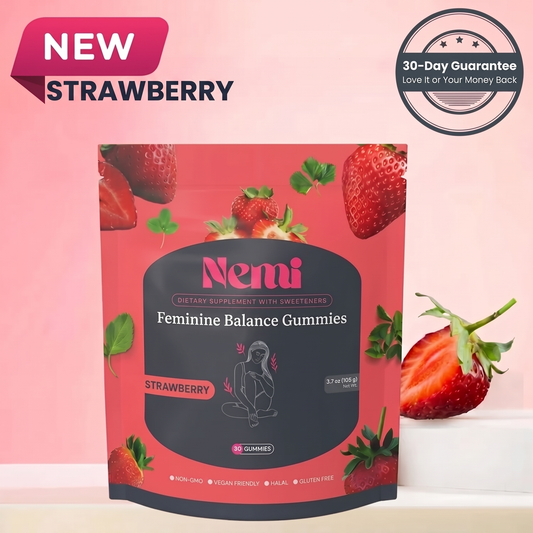
In this article, we explain exactly which vitamins are essential for female intimate balance and how Nemi gummies, available at mynemi.com, provide the most important nutrients to support this balance from within.
Essential vitamins for female intimate balance
Female intimate balance depends on a sufficient intake of specific micronutrients, the deficiencies of which can weaken the vaginal mucous membrane and disturb the protective flora. Here are the most important vitamins to know.
Vitamin D
Vitamin D is the vitamin whose link with female intimate health is the most documented. It plays a central role in regulating the local immune response of the vaginal mucous membrane by stimulating the production of antimicrobial peptides that protect against pathogens responsible for recurrent vaginosis and yeast infections. Women with insufficient vitamin D levels have a significantly higher risk of recurrent bacterial vaginosis. Vitamin D deficiency is very common in France, particularly in winter, and should be screened for and corrected with appropriate supplementation.
Vitamin C
Vitamin C supports the integrity of the vaginal mucous membrane by stimulating collagen synthesis, which maintains tissue strength and elasticity. Its antioxidant action protects mucous membrane cells against oxidative stress. It also supports local immune resistance by strengthening natural defenses against recurrent vaginal infections. Some studies also document the beneficial effect of vitamin C on vaginal pH, the acidification of which helps limit the proliferation of pathogenic bacteria.
Vitamins B6 and B9
Vitamins B6 and B9 play an indirect but significant role in intimate balance by influencing hormonal balance, which conditions the vitality of the vaginal mucous membrane. Vitamin B6 participates in estrogen regulation and supports serotonin production, whose variations influence premenstrual syndrome. Vitamin B9 or folic acid is particularly important for women of childbearing age, whose deficiency is associated with cycle irregularities and increased mucous membrane fragility.
Vitamin E
Vitamin E is a fat-soluble antioxidant that protects the cell membranes of the vaginal mucous membrane against oxidative stress. It supports the natural hydration of tissues and can help reduce mild vaginal dryness, particularly during perimenopause and menopause.
Nemi gummies, available at mynemi.com, combine these essential vitamins with the best-documented probiotic strains to support female intimate balance from within.
Why are vitamins important for female intimate health?
Vitamins are not only important for general health. They play a direct and documented role in maintaining female intimate balance through three complementary mechanisms.
Supporting local immunity of the vaginal mucous membrane
The first reason is the support of local immunity of the vaginal mucous membrane. Certain vitamins, such as vitamin D and vitamin C, directly stimulate the production of antimicrobial peptides and local immune cells, which constitute the first line of defense against pathogens responsible for recurrent vaginosis and yeast infections. A woman with insufficient essential vitamin intake has significantly reduced natural resistance to intimate infections, which explains the recurrence of certain imbalances despite appropriate treatment.
Maintaining the integrity and hydration of the mucous membrane
The second reason is the maintenance of the structural integrity of the vaginal mucous membrane. Vitamins such as vitamin C and vitamin E directly contribute to collagen synthesis, which maintains the flexibility and resistance of tissues and protects mucous membrane cells against oxidative stress. A structurally strong mucous membrane is a better hydrated mucous membrane and more resistant to irritation and recurrent imbalances.
Supporting hormonal balance which conditions intimate vitality
The third reason is the link between vitamins and hormonal balance. B vitamins, particularly B6, directly participate in the regulation of estrogens, whose level conditions the vitality and natural lubrication of the vaginal mucous membrane. A deficiency in B vitamins can worsen the symptoms of relative estrogen insufficiency.
Nemi gummies, available at mynemi.com, combine essential vitamins and probiotics for complete intimate support from within.
How to correct a vitamin deficiency to improve your intimate health?
Correcting a vitamin deficiency to improve your intimate health requires a structured approach that combines a diet enriched with essential micronutrients and targeted supplementation for the most common deficiencies.
The first step is to have your vitamins measured by your doctor. A blood test including vitamin D, vitamin B9 and thyroid function gives you a precise picture of your current levels and the deficiencies to be corrected first. This approach is essential because untargeted supplementation without knowledge of your actual levels can lead to overdoses that are as harmful as deficiencies.
The second step is to enrich your daily diet with foods richest in essential vitamins for intimate health. Fatty fish such as salmon and mackerel for vitamin D. Citrus fruits, kiwis and bell peppers for vitamin C. Legumes, spinach and eggs for B vitamins. And vegetable oils and oilseeds for vitamin E.
The third step is to opt for daily supplementation that combines essential vitamins and specific probiotics for intimate health. Nemi gummies, available at mynemi.com, simultaneously provide the most important nutrients for female intimate balance and the best-documented Lactobacillus strains to restore the vitality of the vaginal flora in a single, simple and pleasant daily dose.