Diet is one of the most direct and least understood factors affecting female hormonal balance. While certain foods support hormone production and menstrual cycle balance, others actively disrupt the endocrine system by mimicking natural hormones, overloading detoxification organs, or promoting inflammatory mechanisms that derail hormonal signaling.
The reality is that many women who suffer from hormonal imbalances consume foods daily that directly worsen their situation without being aware of it. Refined sugars, ultra-processed foods, trans fats, products containing endocrine disruptors, and certain foods marketed as healthy are all dietary categories whose negative impact on female hormonal balance is scientifically documented.
Understanding exactly which foods trigger or worsen a hormonal imbalance is the essential first step toward adopting a diet that supports your natural endocrine balance. This understanding makes it possible to identify the most impactful dietary changes to make as a priority, without requiring restrictive dieting or a radical transformation of eating habits.
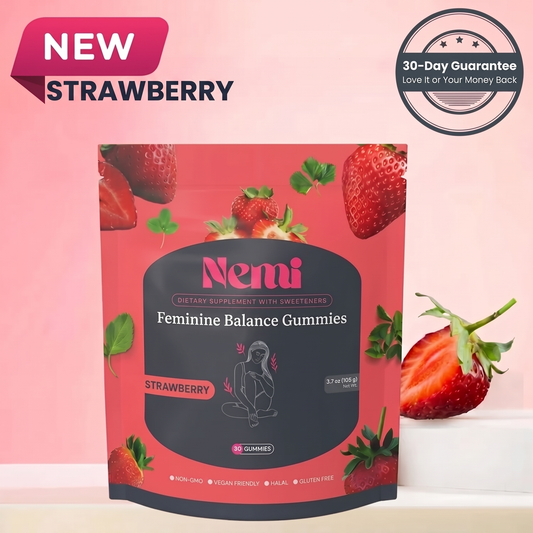
Nemi gummies available at mynemi.com complement this dietary approach by directly supporting the balance of the protective vaginal flora, which is often disrupted by hormonal imbalances caused by an unsuitable diet.
In this article, we explain precisely which foods can cause a hormonal imbalance and how to replace them with alternatives that support your natural endocrine balance.
Refined sugars and ultra-processed foods
Refined sugars and ultra-processed foods are the most widespread hormonal disruptors in the diet, consumed daily by women suffering from hormonal imbalances without them identifying the cause. Their impact on the endocrine system is both direct and cumulative, making this the primary food category to identify and reduce in any approach to natural hormonal rebalancing.
The main mechanism by which refined sugars disrupt hormonal balance is through insulin resistance. Every consumption of refined sugars—such as white sugar, glucose syrups, sodas, industrial pastries, and sugary cereals—triggers a rapid and intense insulin spike. These spikes, repeated several times a day, gradually create insulin resistance, which has significant hormonal consequences. Insulin resistance stimulates the production of androgens by the ovaries, which is one of the central mechanisms of polycystic ovary syndrome (PCOS). It also reduces the production of SHBG, the protein that regulates the availability of sex hormones, which increases the levels of free circulating estrogen and testosterone.
Ultra-processed foods add an additional layer of endocrine disruption via their additives. Emulsifiers, preservatives, artificial colors, and synthetic flavorings present in high concentrations in ultra-processed foods have been linked to a disruption of the gut microbiome, whose balance directly influences the metabolization of hormones by the liver. A disrupted gut microbiome reduces the efficiency of eliminating metabolized estrogens and promotes their reabsorption in the enterohepatic circulation, contributing to functional hyperestrogenism.
Trans fats found in many ultra-processed products, such as industrial biscuits, hydrogenated margarines, and ready-made meals, disrupt the fluidity of cell membranes and reduce the sensitivity of hormonal receptors, which degrades the quality of hormonal signaling at the cellular level.
Significantly reducing the consumption of refined sugars and ultra-processed foods is the most accessible high-impact dietary change for improving female hormonal balance. Nemi gummies, available at mynemi.com, support the vitality of the vaginal flora, which is often disrupted by these imbalances.
Endocrine disruptors hidden in the daily diet
Dietary endocrine disruptors are chemical substances present in the daily diet that mimic or block the action of natural hormones in the body. Unlike refined sugars, whose hormonal impact is well known to women seeking to rebalance their hormones, dietary endocrine disruptors are often invisible and unsuspected because they are found in foods and containers that appear healthy and ordinary.
The first and most widespread dietary endocrine disruptor is bisphenol A (BPA). This chemical substance, used in the manufacturing of food plastics, canned goods, and store receipts, migrates into food upon direct contact, especially during heating. BPA is a xenoestrogen that binds to estrogen receptors in cells and disrupts natural hormonal signaling. Its presence in the diet contributes to functional hyperestrogenism, with effects that accumulate through chronic, daily exposure.
The second endocrine disruptor is that of organochlorine pesticides present in non-organic fruits and vegetables. These pesticide residues are documented endocrine disruptors; some mimic natural estrogens, while others block the action of testosterone. Strawberries, apples, grapes, and celery consistently appear among the fruits and vegetables most contaminated with pesticide residues in annual analyses.
The third disruptor is phthalates, found in plastic food packaging, cling film, and certain fast-food containers. These chemical substances disrupt the production of testosterone and estrogen and have been linked to menstrual cycle irregularities in several epidemiological studies.
The fourth disruptor is non-fermented soy when consumed in excess. Soy contains natural phytoestrogens called isoflavones, which can modulate the body's estrogenic activity. When consumed in small quantities in fermented form, soy is generally beneficial. When consumed in excess in the form of isolated soy proteins in ultra-processed vegetarian products, it can disrupt female hormonal balance.
Excess alcohol and caffeine: their effects on female hormones
Alcohol and caffeine are two legal and socially normalized substances whose excessive consumption significantly disrupts female hormonal balance through distinct mechanisms that have converging consequences on the endocrine system.
Alcohol and female hormones
Alcohol is one of the most powerful hormonal disruptors available in the common diet. Its impact on female hormonal balance is multiple and cumulative. The first consequence is its direct effect on the hepatic metabolism of estrogen. The liver is the main organ for metabolizing and eliminating estrogen. When the liver is busy metabolizing alcohol, it processes estrogen less efficiently, leading to an accumulation of circulating estrogen and contributing to relative hyperestrogenism.
The second consequence is a direct increase in estrogen levels. Studies have documented a significant increase in circulating estrogen after alcohol consumption, even in moderate amounts, in premenopausal women. This estrogenic elevation worsens hyperestrogenism symptoms such as breast tenderness, heavy periods, and premenstrual syndrome (PMS).
The third consequence is the disruption of cortisol and sleep. Alcohol increases cortisol secretion and disrupts the deep sleep phases that are essential for nocturnal hormonal regulation. This double disruption creates an overall hormonal imbalance that worsens with regular consumption.
Excess caffeine and female hormones
Caffeine consumed in excess—beyond three cups of coffee per day—stimulates the adrenal glands and increases the production of cortisol and adrenaline. This chronic stimulation of the adrenals can disrupt the hypothalamic-pituitary-ovarian axis and create menstrual cycle irregularities, particularly in women already experiencing chronic stress.
Excess caffeine also reduces the absorption of magnesium, which is essential for progesterone production, worsening premenstrual symptoms in women whose magnesium intake is already insufficient.
Conclusion
Diet is one of the most powerful and accessible levers for preserving or restoring female hormonal balance. Foods that disrupt the endocrine system are not rare exceptions in the modern diet. They often form the foundation of the daily diet for many women who suffer from hormonal imbalances without identifying the dietary cause.
Foods to reduce or eliminate as a priority to preserve your hormonal balance:
- White sugar and refined sugars
- Sodas and sugary drinks
- Industrial pastries and biscuits
- Sugary breakfast cereals
- Ultra-processed foods and ready-made meals
- Trans fats and hydrogenated margarines
- Non-organic fruits and vegetables rich in pesticides
- Plastic packaging containing bisphenol A
- Excess non-fermented soy
- Alcohol, even with regular moderate consumption
- Caffeine beyond three cups per day
- Conventional meat and dairy products rich in growth hormones
Gradually reducing these foods in favor of an anti-inflammatory diet rich in fiber, omega-3s, antioxidants, and essential micronutrients like zinc, magnesium, and vitamin D is the most effective dietary strategy for naturally supporting female hormonal balance over the long term.